
Condo & HOA Mold in Lee County
Mold in a condo or HOA home is rarely just one owner's problem. We connect Lee County owners and associations with Florida-licensed mold assessors and remediators. Tell us what you're seeing and we'll help you get quotes from licensed local pros.
Get a Free Quote Call (727) 300-6656Why condo mold is different
In a condo or townhome, the water that causes mold often starts somewhere you don't control: the unit above, a shared plumbing stack, a common wall, the roof or the building's exterior. A leak can wet drywall in several units at once, and by the time a stain shows up in your bathroom, the source may be next door or a floor up.
Seasonal ownership adds another layer. Census figures (ACS 2024 5-year) show about 48% of all housing units on Fort Myers Beach and 43% on Sanibel are held for seasonal, recreational or occasional use. In both places, vacant units outnumber occupied ones. Bonita Springs (about 30%) and Estero (about 28%) also have large seasonal shares. A slow leak or a failed AC in an empty unit can go unnoticed for weeks during the humid summer, when FSU's Florida Climate Center reports Fort Myers morning humidity near 88–91%.
Common condo and HOA trouble spots:
- Bathroom and kitchen walls that share plumbing with the next unit
- Ceilings below another unit's bathroom, laundry or water heater
- AC closets and condensate lines in units left empty for the season
- Exterior walls and windows after hurricane-driven rain
What licensed pros typically do in a condo
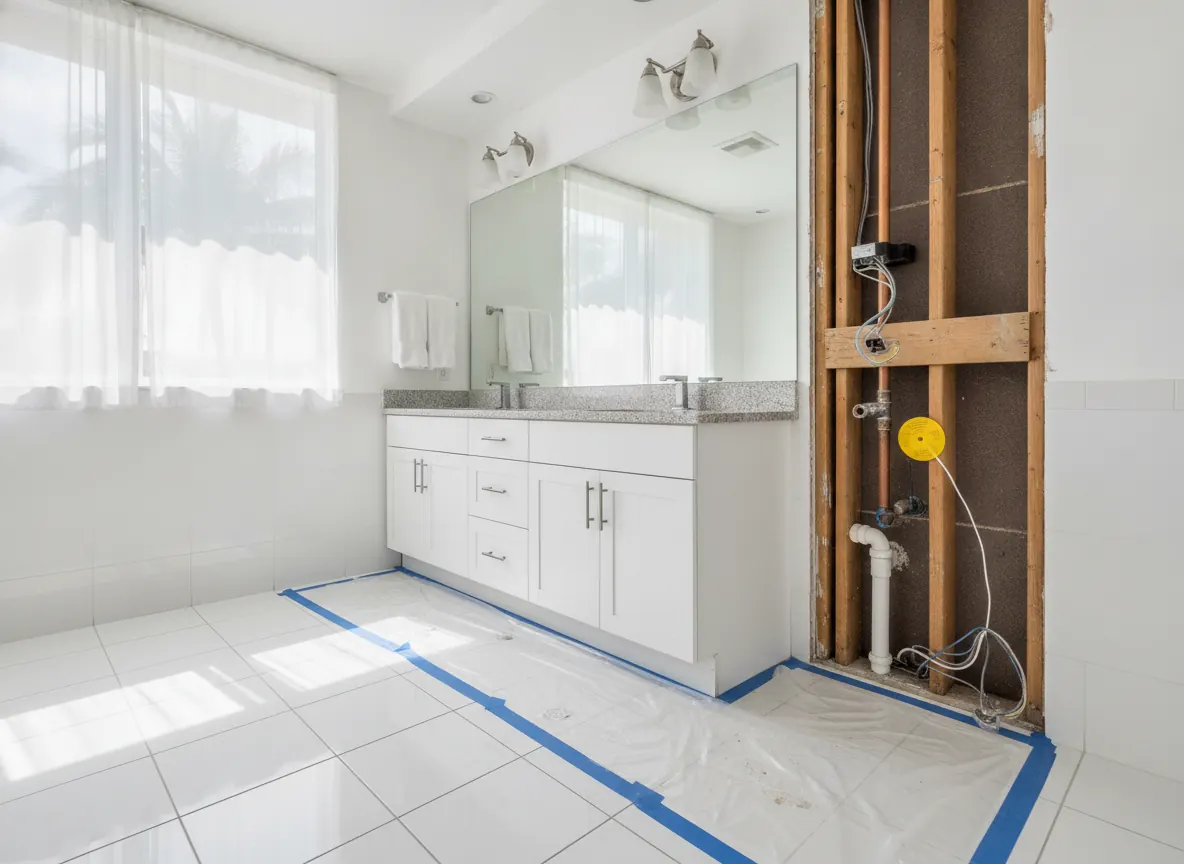
The work is similar to any home, but coordination matters more. A licensed mold assessor typically checks the affected unit and, with permission, adjacent units or common areas to trace the moisture source and map how far growth extends. The written scope helps owners, the association and insurers see the same facts.
A licensed remediator then contains the work area so spores don't travel into hallways or shared air paths, removes affected drywall and insulation, cleans framing, and dries the area before rebuild. Shared plumbing or exterior repairs often require the association's approval and a separate trade.
Ask any company for its Florida license number and verify it at MyFloridaLicense.com.
Coordinating with your association
Who pays depends on your governing documents and insurance — check them. Your declaration, bylaws and rules describe which parts of the building the association maintains and which the owner maintains. Your HO-6 policy and the association's master policy each have their own coverage terms, limits and exclusions. The source of the water often matters, so document it.
- Notify the association in writing with photos and dates
- Notify your insurer and keep a copy of your claim
- Ask the association whether it will arrange an assessment, or whether you should
- Keep every report, scope and invoice
We don't make coverage or legal determinations. For a definitive answer, talk to your association manager, insurance agent or a Florida attorney. Our post on who pays for condo mold in Florida walks through the questions to ask.
This is general information, not legal advice.
Typical steps for condo and HOA mold
The process page explains each stage in more depth.
Document and notify
Photograph the damage, note when you found it and report it to the association and your insurer in writing.
Request quotes
Use the free quote form to tell us about the unit and building. We usually reply the same day.
Independent assessment
A licensed assessor traces the source and writes a scope. Under Florida's 12-month rule, the assessor is typically a separate company from the remediator.
Agree on scope and access
Owners, neighbors and the association agree on access, timing and who arranges which repairs.
Remediation and drying
The remediator contains, removes, cleans and dries; plumbing or building repairs follow.
Clearance
Many owners and associations have a separate assessor confirm the work before walls are closed.
What condo mold remediation costs
| Item | Typical range |
|---|---|
| Small area (~50 sq ft) | $500–$1,500 |
| Medium area (100–200 sq ft) | $1,000–$6,000 |
| Mold inspection | $450–$800 (national avg about $500; Florida avg about $739) |
Typical national ranges from cost guides, 2025–2026 — not quotes. Remediation quotes may not include inspection or clearance testing (This Old House). See the mold remediation cost guide for more sizes.
Related help
If the leak came from a storm, see storm & water damage mold. If the AC closet is the source, read AC & HVAC mold. For seasonal homes on the islands, see the Fort Myers Beach and Sanibel pages. If anyone in the unit has health concerns, talk to a doctor.
Condo & HOA mold FAQ
Who pays for mold remediation in a Florida condo?
Who pays depends on your governing documents and insurance — check them. Your declaration and bylaws describe which parts of the building the association maintains and which the owner does, and your HO-6 policy and the association's master policy each have their own terms. Where the water came from often matters. For a definitive answer, talk to your association manager, insurer or a Florida attorney.
Should I tell my HOA or condo association about mold?
In most cases it makes sense to notify the association promptly, especially if water may be coming from a shared wall, the unit above, a common pipe or the roof. Many governing documents set notice requirements. Put the report in writing, include photos and dates, and keep copies. Your governing documents explain the specific process for your community.
Can mold spread between condo units?
Water can. A leak from a shared plumbing stack, a unit above or a building envelope problem can wet drywall in more than one unit, and mold can follow in any area that stays damp. EPA's mold guide recommends drying water-damaged areas within 24-48 hours. That is why coordinating with neighbors and the association early helps the whole building.
How do I protect a seasonal condo from mold while I'm away?
Common steps include keeping the AC running at a moderate setting rather than off, asking someone to check the unit regularly and after storms, shutting off the main water supply if the association allows it, and making sure the condensate drain is clear before you leave. Ask the association what its rules require for unoccupied units.
Does the association pick the mold remediator?
It depends on where the mold is and what your governing documents and insurance say. For common elements, the association typically arranges the work; for areas the owner maintains, the owner may hire the remediator. Either way, ask any company for its Florida license number and verify it at MyFloridaLicense.com. This is general information, not legal advice.
Seeing or smelling mold? Get a clear plan.
Free, no-pressure quotes across Fort Myers, Cape Coral, Lehigh Acres, Bonita Springs and the rest of Lee County.