
Mold Inspection & Testing in Fort Myers
Musty smell, stains on the drywall or a recent leak? We connect Fort Myers and Lee County homeowners with Florida-licensed mold assessors. Tell us what you're seeing and we'll help you get quotes from licensed local pros.
Get a Free Quote Call (727) 300-6656Why mold is hard to judge on your own in Lee County
Mold needs two things Fort Myers has in abundance: warmth and moisture. FSU's Florida Climate Center reports Fort Myers averages 88% relative humidity in the morning, and morning humidity stays between 84% and 91% every month of the year. Add a slow plumbing leak, a sweating air handler or a roof that let water in during the last storm, and growth can start where you can't see it: behind baseboards, under sinks, inside wall cavities and around AC closets.
The hard part for most homeowners isn't spotting a patch of mold. It's knowing how far it goes, what caused it and whether the job is small enough to handle yourself. That's what a mold assessment is for. A licensed assessor looks for the moisture source, maps the extent of growth and writes up what a remediator should do. That written scope is what lets you compare remediation quotes on equal terms.
Signs that usually justify a professional assessment:
- A persistent musty odor with no visible source
- Staining, bubbling paint or soft drywall near bathrooms, kitchens or the AC closet
- Water intrusion from a storm, flood, roof leak or plumbing failure
- Visible growth that looks larger than about 10 square feet
- A home purchase, sale or insurance claim where you need documentation
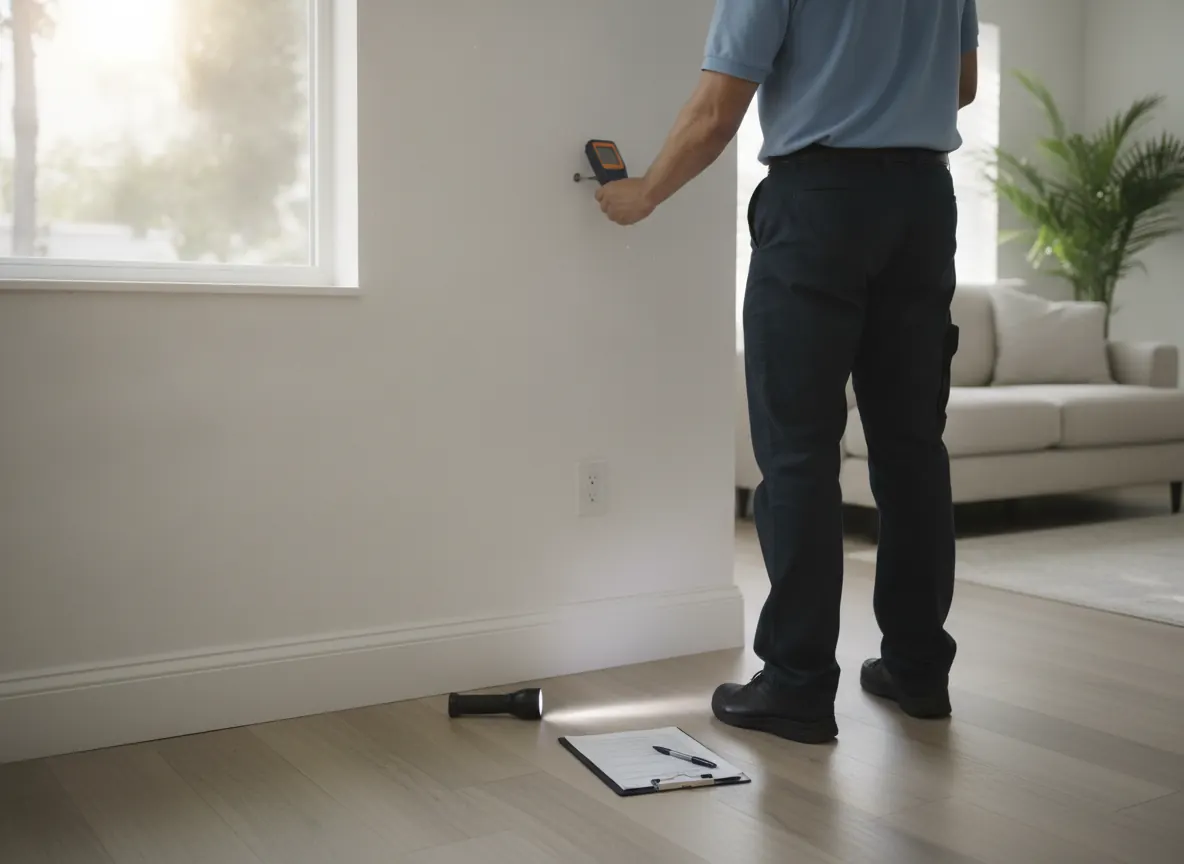
What a licensed mold assessor typically does
Florida Statutes s. 468.8411 defines “mold assessment” as sampling and evaluation “to formulate an initial hypothesis about the origin, identity, location, and extent of amplification of mold growth of greater than 10 square feet.” In plain terms, the assessor's job is diagnosis, not removal.
During a visit, an assessor typically interviews you about leaks and odors, walks the home with a moisture meter and often a thermal camera, opens or probes suspect areas, and checks the AC system and attic where relevant. If sampling is useful, they collect air or surface samples for a lab. The result is a report describing where the mold is, what likely caused it and a recommended remediation protocol.
Testing isn't always needed. EPA's mold guide says, “In most cases, if visible mold growth is present, sampling is unnecessary.” A good assessor will tell you when samples add value and when they don't.
How a mold inspection usually works
See the full mold remediation process for what happens after the assessment.
Tell us what you're seeing
Use the free quote form to describe the odor, stains, leak or storm damage, plus your ZIP code. We usually reply the same day.
Get quotes from licensed assessors
We connect you with Florida-licensed mold assessors who serve your part of Lee County. Ask each company for its Florida license number and verify it at MyFloridaLicense.com.
The on-site assessment
The assessor inspects, measures moisture, and samples only if it helps answer a specific question about the home.
Review the written report
You get findings and a remediation scope you can hand to separate remediation companies for comparable bids.
Clearance after remediation
Many homeowners have an assessor return after the work to confirm the area is dry and the scope was completed. Ask whether a quote includes this.
Florida's 12-month rule: why assessor and remediator are usually separate
Florida Statutes s. 468.8419 limits conflicts of interest. A mold assessor may not perform or offer to perform remediation on a structure where the assessor or the assessor's company provided an assessment within the last 12 months. A remediator has the matching restriction in reverse. The statute exempts a certified contractor classified as a Division I contractor under s. 489.105(3).
The practical result: the company that assesses your home and the company that remediates it are typically separate. That separation gives you an independent scope to compare bids against, and an independent check when the work is done. Read more in our explainer on Florida's 12-month rule and how to verify a Florida mold license.
This is general information, not legal advice.
What a mold inspection costs
| Item | Typical range |
|---|---|
| Mold inspection | $450–$800 (national avg about $500; Florida avg about $739) |
| Extra lab samples | $60–$80 each |
Typical national ranges from cost guides, 2025–2026 — not quotes. Your price comes from a licensed pro after seeing the home. Note that remediation quotes may not include inspection or clearance testing (This Old House), so ask what each quote covers. For remediation ranges by size, see the mold remediation cost guide and our post on mold inspection cost in Florida.
After the inspection
If the assessment confirms growth larger than about 10 square feet, the next step is a licensed remediator. Our mold removal page explains containment, removal and drying. If the source is your air conditioning, see AC & HVAC mold; if it followed a storm, see storm & water damage mold. Wondering whether a store kit is enough? Read how accurate DIY mold test kits are.
If anyone in the home has health concerns related to mold, talk to a doctor.
Mold inspection & testing FAQ
How much is a mold inspection in Florida?
Cost guides put a typical mold inspection at $450 to $800, with a national average of about $500 (Fixr). Clever Real Estate lists a Florida average of about $739. Extra lab samples often run $60 to $80 each. These are typical national ranges, not quotes; the real price depends on the home's size, access and how many samples the assessor recommends.
Do I need mold testing if I can already see mold?
Often not. EPA's mold guide says, “In most cases, if visible mold growth is present, sampling is unnecessary.” An assessment can still help when the affected area is large, hidden behind walls, tied to a water loss or an insurance claim, or when you want a written scope and post-remediation clearance check. A licensed assessor can explain which applies to your home.
Can the same company inspect and remove the mold?
Under Florida Statutes s. 468.8419, a mold assessor may not perform or offer remediation on a structure the assessor's company assessed within the last 12 months, and a remediator has the matching restriction. The statute exempts Division I certified contractors. In practice, the assessor and remediator are typically separate companies. This is general information, not legal advice.
Are DIY mold test kits accurate?
A home kit can show that mold spores exist, but spores are present in nearly every indoor and outdoor space, so a positive result rarely tells you where growth is or how far it extends. EPA notes sampling is often unnecessary when growth is visible. A licensed assessor looks for moisture sources and the extent of growth, which is what a remediation plan needs.
Is free mold testing in Cape Coral or Fort Myers worth it?
Be cautious with any offer that bundles a free inspection with remediation by the same company. Florida's 12-month rule generally separates assessment and remediation on the same structure, except for Division I certified contractors. Ask any company for its Florida license number, verify it at MyFloridaLicense.com, and get the assessment in writing before you schedule removal work.
Seeing or smelling mold? Get a clear plan.
Free, no-pressure quotes across Fort Myers, Cape Coral, Lehigh Acres, Bonita Springs and the rest of Lee County.